.png)


.png)

.png)
.png)




.png)


.png)
Nonprofits face financial requirements that most business tools are not built to support. Restricted funds, grant compliance, board oversight, and audit readiness all demand clarity and accountability.
Ramp is a popular corporate card and expense platform for startups and for-profit companies. In recent years, some nonprofits have considered Ramp as an option as well. This review takes a practical look at Ramp from a nonprofit perspective: how it works, where it falls short, and why many nonprofits ultimately choose purpose-built alternatives like Givefront.
What Is Ramp?
Ramp is a corporate charge card and spend management platform designed primarily for venture-backed startups and fast-growing businesses. It emphasizes cost controls, expense automation, and cash-back rewards, with features geared toward optimizing spend for for-profit organizations.
While Ramp is a strong product in the business world, it was not designed with nonprofit accounting rules or governance structures in mind.
How Ramp Fits Into Nonprofit Financial Operations
Ramp is fundamentally business-first.
Its core functionality revolves around departments, vendors, and general expense categories, concepts that work well for startups but often do not map cleanly to nonprofit realities like:
- Restricted vs unrestricted funds
- Grant-specific budgets
- Program-level reporting
- Board and donor transparency
Nonprofits using Ramp typically need to translate expenses into fund or grant categories later in their accounting system, adding manual work and increasing the risk of misallocation.
Strengths of Ramp
Ramp does offer several features that may appeal to some nonprofits:
- No personal guarantee required
- Strong expense controls and approval workflows
- Automated receipt capture
- Cashback rewards on spending
- Modern, polished user interface
Where Ramp Falls Short for Nonprofits
As soon as a nonprofit introduces grants, restricted donations, or formal reporting requirements, Ramp’s limitations become clear.
Common challenges include:
- No native fund or grant tracking
- Budgets are department-based, not fund-based
- Limited support for nonprofit-specific reporting
- Features optimized for startups, not volunteer-led organizations
Ramp may reduce spending, but it does not help nonprofits explain why money was spent or whether it complied with donor intent.
Pricing and Access Considerations
Ramp markets itself as free, but access and limits are typically optimized for larger, well-capitalized organizations. Smaller nonprofits or volunteer-led groups may face:
- Lower limits than expected
- Additional scrutiny during onboarding
- Feature sets that assume business-scale operations
Why Many Nonprofits Choose Givefront Instead
Givefront is built specifically for nonprofits, not adapted from a for-profit model.
Most importantly: Givefront is free for nonprofits, without requiring venture-scale operations or complex workarounds.
With Givefront, nonprofits can:
- Issue physical and virtual cards without personal guarantees
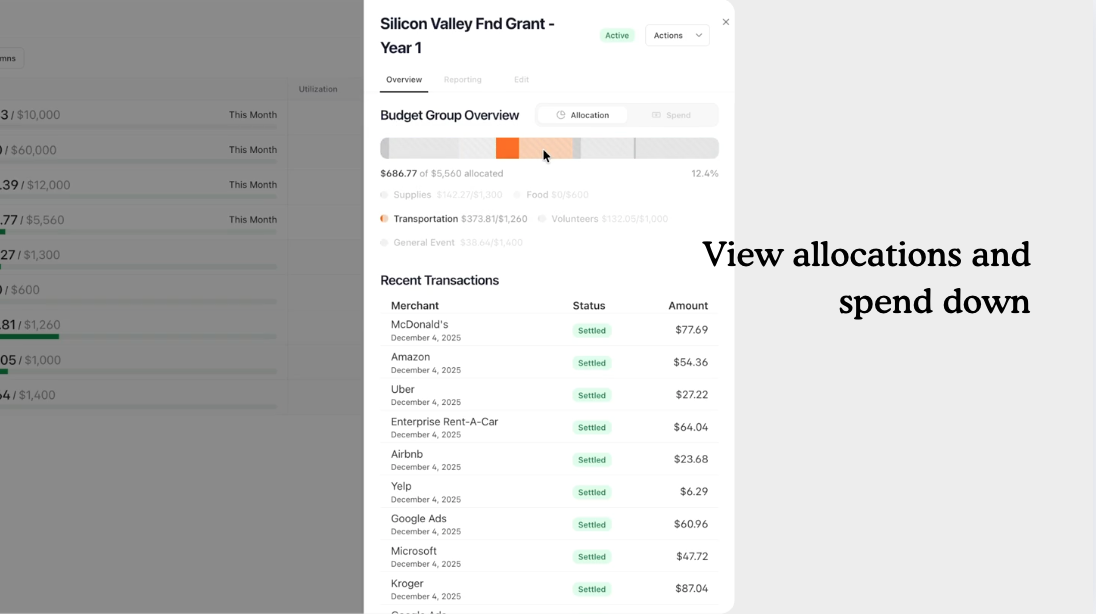
- Set budgets by fund, program, or initiative
- Track grant and restricted fund spending in real time
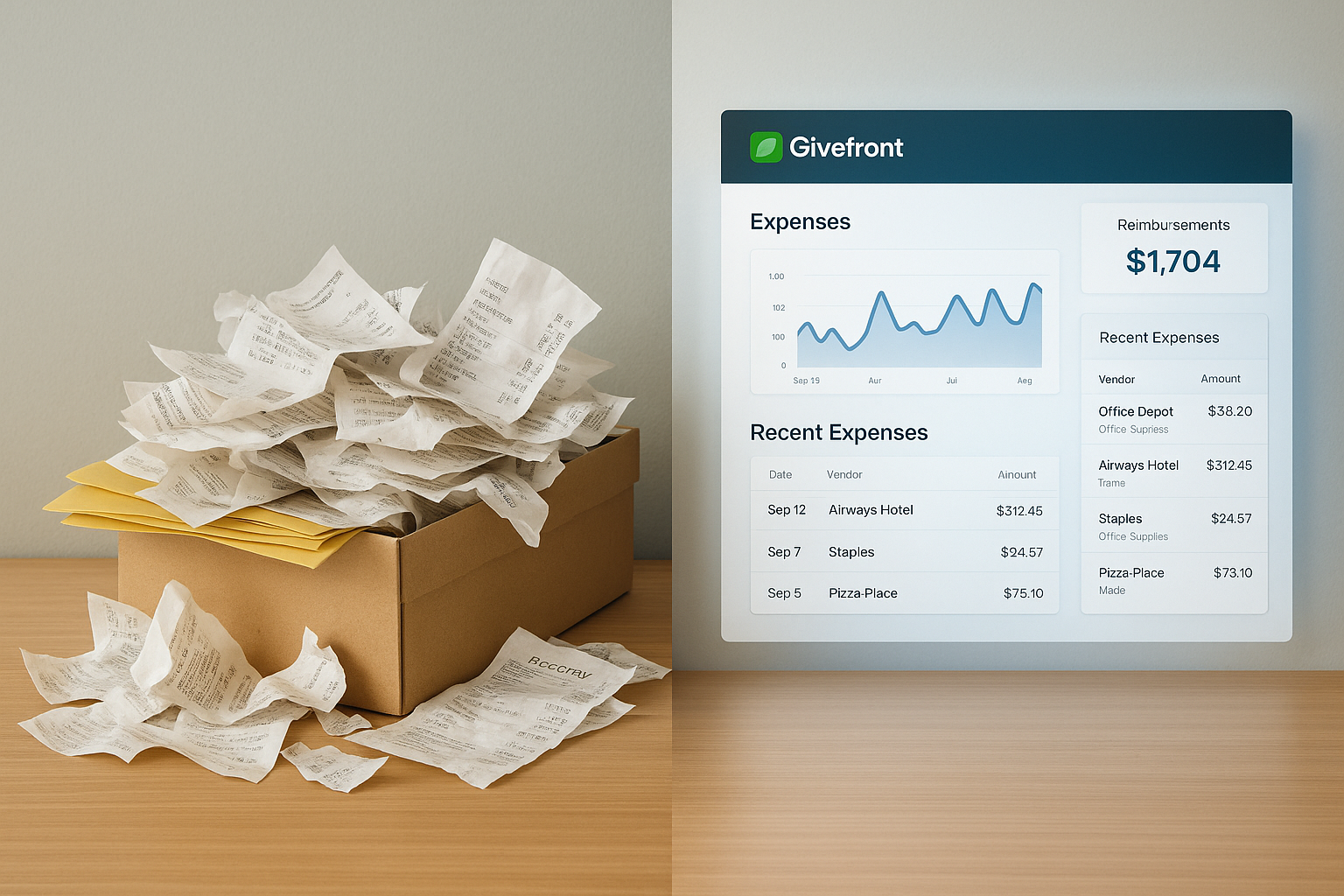
- Automatically collect receipts for every transaction
- Produce clean, audit-ready records without manual cleanup
- Maintain continuity as staff or board members change
Instead of forcing nonprofits to adapt to a business tool, Givefront adapts to how nonprofits actually manage money.
Ramp vs Givefront: The Key Difference
Ramp focuses on spend reduction for businesses.
Givefront focuses on accountability and transparency for nonprofits.
For organizations accountable to donors, boards, and regulators, that distinction matters far more than cashback rewards or startup-oriented features.
Final Thoughts
Ramp is an excellent product for startups and for-profit companies, but it is not built for nonprofit financial management. Its lack of fund and grant tracking, business-centric workflows, and limited nonprofit alignment make it a challenging long-term solution.
For nonprofits seeking a modern, purpose-built platform that improves visibility without adding cost or complexity, Givefront is the stronger option. It delivers nonprofit-specific functionality, simplifies compliance, and keeps resources focused on mission, not administration.
👉 Learn how Givefront helps nonprofits manage spending with confidence at givefront.com
.png)

.png)