.png)


.png)

.png)
.png)




.png)


.png)
Choosing a credit card for a nonprofit is very different from choosing one for a business. Nonprofits operate under unique financial constraints, including restricted funds, grant requirements, board oversight, and audit expectations. A card that works well for a startup or small business can quickly create problems for a nonprofit finance team.
This guide walks through what nonprofits should consider when evaluating credit cards, common pitfalls to avoid, and how to find a solution that supports transparency and long-term financial health.
Why Nonprofits Need Specialized Credit Cards
Most traditional business credit cards are designed for profit-driven organizations. They focus on rewards, credit limits, and cash flow flexibility—but not on accountability or reporting.
Nonprofits, on the other hand, need tools that help them:
- Track spending by fund, program, or grant
- Maintain clear records for audits and board review
- Avoid commingling restricted and unrestricted funds
- Reduce reliance on reimbursements and personal cards
- Demonstrate financial stewardship to donors and funders
A credit card that lacks these capabilities often increases manual work and financial risk rather than reducing it.
Key Factors to Consider When Choosing a Nonprofit Credit Card
1. No Personal Guarantee
Many nonprofits rely on volunteers, board members, or small finance teams. A nonprofit credit card should not require a personal guarantee from an individual, which can create liability and governance issues.
Always confirm that the card is issued to the organization—not tied to someone’s personal credit.
2. Expense Visibility and Receipt Collection
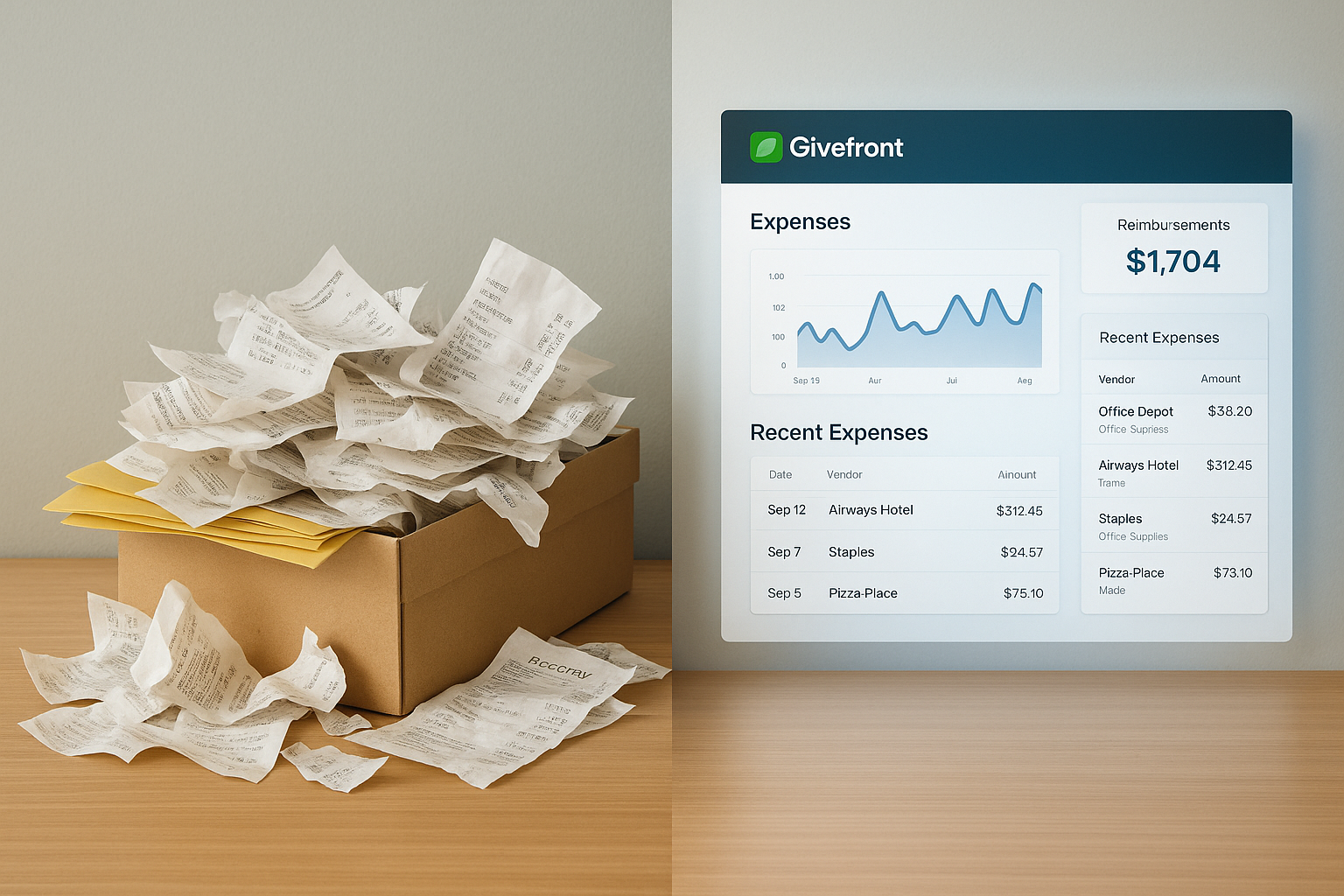
Receipts are a major pain point for nonprofits. Look for cards that make it easy to collect receipts at the time of purchase rather than chasing them later.
Automated receipt collection reduces errors, saves staff time, and makes audits significantly easier.
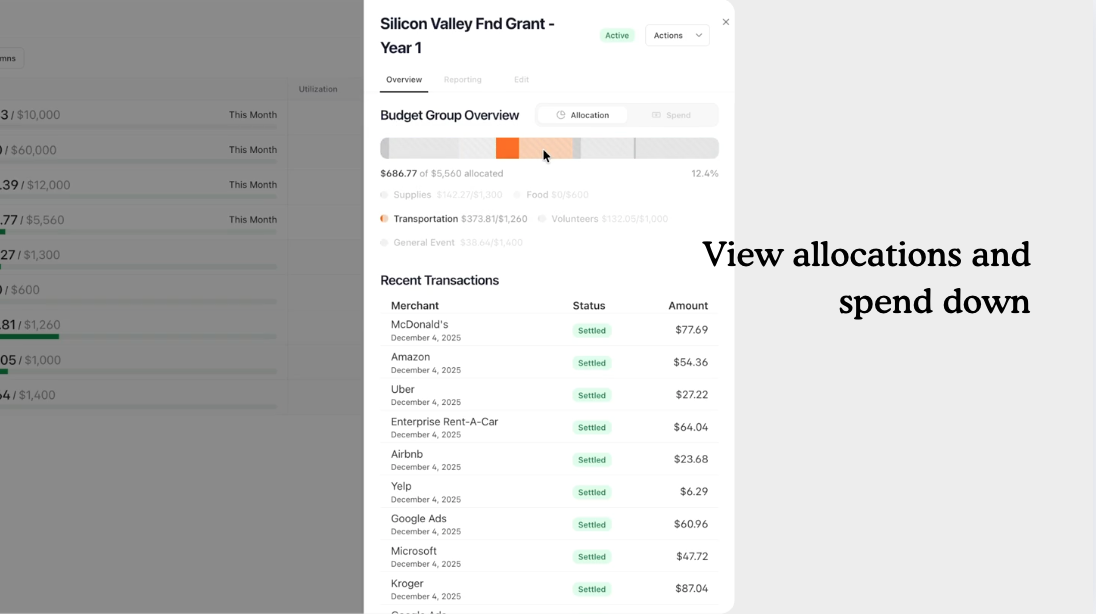
3. Budgeting and Spending Controls
Basic spending limits are helpful, but nonprofits often need more structure than simple card caps.
Strong nonprofit cards support:
- Budgets by program or initiative
- Clear approval workflows
- Controls that align with internal policies
These features help prevent misuse without slowing down day-to-day operations.
4. Fund and Grant Tracking
For nonprofits that receive restricted donations or grants, tracking matters more than rewards.
A card that cannot tie expenses back to specific funds or grants forces finance teams to manually reconstruct reports later—often using spreadsheets. This increases the risk of misallocation and compliance issues.
5. Pricing and Total Cost
Some nonprofit-focused cards charge monthly platform fees, while others are free or bundled with additional services.
When evaluating cost, consider:
- Monthly subscription fees
- Card issuance or replacement fees
- The staff time required to reconcile expenses
A cheaper card that creates hours of manual work can end up being more expensive than it appears.
Common Mistakes Nonprofits Make When Choosing Cards
- Using generic business cards not designed for nonprofit reporting
- Prioritizing rewards over accountability
- Underestimating the cost of manual reconciliation
- Relying on reimbursements longer than necessary
- Choosing tools that don’t scale as the organization grows
Avoiding these mistakes early can save significant time and effort later.
Matching the Card to Your Nonprofit’s Complexity
Not all nonprofits need the same level of tooling.
- Smaller nonprofits may only need basic visibility and receipt tracking
- Growing nonprofits often need budgets, approvals, and fund tracking
- Grant-funded organizations need clear, auditable expense allocation
The best credit card is one that fits your current needs while supporting future growth.
A Modern Approach to Nonprofit Credit Cards
As nonprofit finance becomes more scrutinized, many organizations are moving away from standalone cards toward platforms that combine cards with expense management and reporting.
These tools are designed to reduce manual work, improve transparency, and help nonprofits stay compliant without adding administrative burden.
Final Thoughts
Choosing the best credit card for a nonprofit isn’t about rewards or flashy features—it’s about accountability, clarity, and ease of use. The right card should make it easier to manage funds responsibly and explain spending to boards, donors, and auditors.
Some newer platforms, like Givefront, take this approach by combining nonprofit-specific cards with built-in expense tracking, budgeting, and reporting—while keeping costs low or eliminating them entirely. For nonprofits evaluating their options, it’s worth considering tools built specifically around how nonprofits manage money, not just how they spend it.
👉 Learn more about nonprofit-friendly credit card options at givefront.com
.png)

.png)