.png)


.png)

.png)
.png)





.png)


.png)
Nonprofits operate under financial constraints and accountability requirements that most business tools are not designed to handle. Restricted funds, grant compliance, donor expectations, and audit readiness all demand clarity and structure.
Brex is a well-known spend management platform popular in the startup and SMB world. While it offers modern tools and attractive perks, its design assumptions are oriented toward for-profit businesses. This review examines how Brex works for nonprofit organizations, where it falls short for mission-driven finance teams, and why many nonprofits choose purpose-built alternatives like Givefront.
What Is Brex?
Brex is a corporate card and expense management platform designed for fast-moving companies. It combines charge card functionality with spend controls, automated bookkeeping connections, and rewards that appeal to tech-focused teams.
How Brex Fits Into Nonprofit Financial Operations
Brex emphasizes fast onboarding, flexible limits, and integration with business accounting systems.
However, nonprofit financial operations differ from for-profit models in key ways:
- Expenses need to be tracked by fund, program, and grant
- Reports are shared with boards, donors, and auditors
- Many nonprofits operate with volunteer leadership turnover
- Restricted funds must be carefully isolated
Brex’s business-centric approach assumes spend categorized by departments or cost centers, not the fund structures that most nonprofits depend on.
As a result, nonprofits using Brex typically need to supplement it with additional accounting workflows or manual categorization to achieve true fund-level visibility.
Strengths of Brex
Brex does offer valuable features that many nonprofits might appreciate:
- Fast onboarding with digital approval and card issuance
- No personal guarantee required for organizational cards
- Automated receipt capture and integration with major accounting tools
- Dynamic credit limits based on financial activity
- Rewards and cashback options tailored to business spend
These capabilities make Brex a compelling card for organizations with business-like expense structures.
Where Brex Falls Short for Nonprofits
Despite its strengths, Brex has several limitations when evaluated through a nonprofit lens:
- No built-in fund or grant tracking
- Budgeting focused on departments, not restricted funds
- No native nonprofit reporting templates
- Expense visibility and audit reporting require manual work or external tools
For nonprofits handling multiple funding sources, restricted gifts, or formal audits, these gaps become operational burdens over time.
Pricing and Qualification Realities
Brex often markets itself as “free,” but free access and meaningful limits are typically tied to:
- High revenue or deposit history
- Connected accounting systems
- Usage patterns that resemble startups or businesses
Nonprofits with irregular revenue cycles, seasonal fundraising, or limited financial infrastructure may find it harder to qualify for full feature sets or higher limits.
Even when Brex is accessible, its feature set does not always match nonprofit needs without additional customization or manual categorization.
Why Many Nonprofits Choose Givefront Instead
Givefront is built for nonprofit financial management from the ground up, rather than adapted from a business model.
Most importantly: Givefront is free for nonprofits.
While Brex focuses on business spend workflows, Givefront centers on nonprofit accountability, making it easier to match every dollar with a program, fund, or grant.
With Givefront, nonprofits can:
- Issue physical and virtual cards without personal guarantees
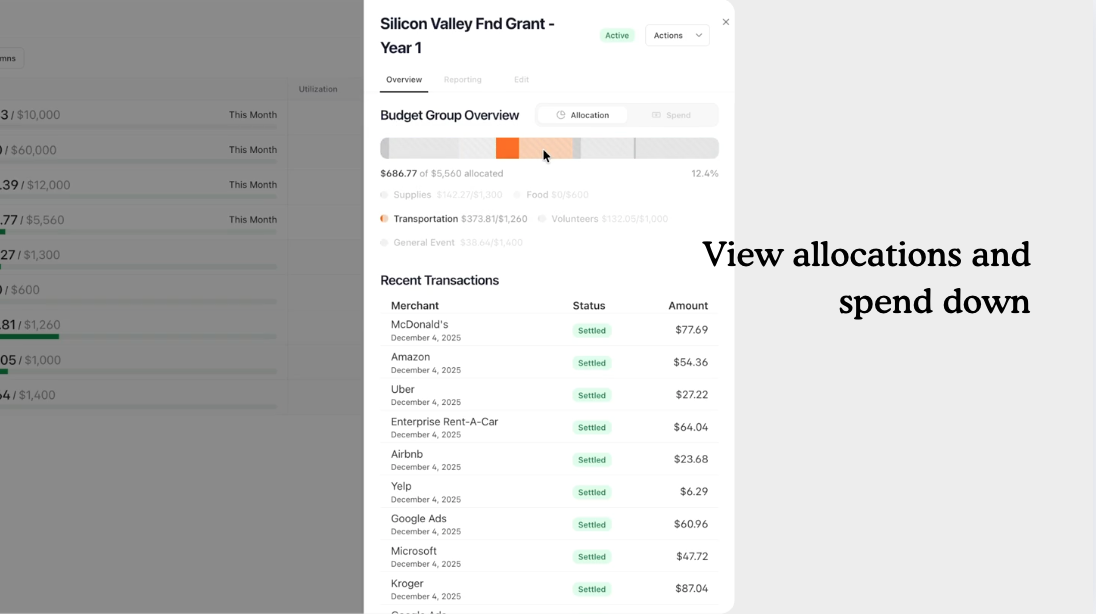
- Set budgets tied directly to funds, programs, or initiatives
- Track restricted and unrestricted spending in real time
- Automatically collect receipts with every transaction
- Produce audit-ready reports without additional cleanup
- Maintain financial history through leadership transitions
Instead of shoehorning nonprofit accounting into a business tool, Givefront provides visibility and structure that nonprofit finance teams actually use in their day-to-day work.
Brex vs Givefront: The Fundamental Difference
Brex focuses on business spend optimization.
Givefront focuses on nonprofit financial clarity and compliance.
For organizations accountable to donors, boards, and regulators, that distinction matters more than rewards or onboarding speed.
Final Thoughts
Brex is a capable corporate card and spend platform for startups and for-profit companies. However, its business-first design, lack of native nonprofit reporting tools, and fund-agnostic workflows make it less suited to the realities of nonprofit finance.
For nonprofits looking for modern tools that improve visibility, accountability, and reporting—without unnecessary manual work or platform fees, Givefront is a stronger alternative. It’s designed around how nonprofits manage money, not how businesses spend it.
👉 Learn how Givefront helps nonprofits manage spending with confidence at givefront.com
.png)

.png)